
The 9 Biggest Mistakes When Choosing a Wheelie Bin Storage Unit (and How to Avoid Them)
, 8 min reading time
, 8 min reading time
A wheelie bin enclosure may seem like a simple addition: place it in front of your bin and the job is done. Yet when purchasing a wheelie bin enclosure or bin storage unit, mistakes occur more often than expected. Incorrect dimensions, unsuitable materials for the environment, or doors that do not fit the available space can lead to costly and frustrating issues. This guide is intended for anyone looking for a wheelie bin enclosure that truly fits their bin, outdoor space, and everyday needs. Below, you'll discover the most common mistakes, why they happen, and how to avoid them with a few practical decisions.
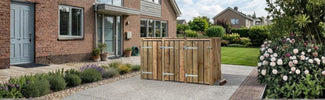
A wheelie bin enclosure is an outdoor storage unit or housing designed to conceal one or more waste bins from view. A bin storage unit creates a tidier appearance around a garden, driveway, or property exterior while also helping protect bins from wind and pests. Wheelie bin enclosures are available in a range of materials, including wood, steel, corten steel, and composite, and can accommodate one, two, or three bins. As a result, a wheelie bin enclosure combines practical functionality with an attractive outdoor appearance.
Advantages:
Disadvantages:
The most common mistake when purchasing a bin storage unit is selecting a model without measuring the waste bin first. Standard bins are often available in 60-litre, 120-litre, and 240-litre sizes, each with different widths, depths, and heights. Always measure carefully before purchasing and allow additional vertical space for the lid to open fully.
A wheelie bin enclosure typically features a front or side door that must be able to open freely. If a hinged-door model is installed too close to a wall or boundary, the door may not open completely. Models with sliding doors or upward-opening panels offer greater flexibility in narrower spaces.
Not every material performs equally well in every outdoor setting. Untreated softwood can deteriorate quickly in damp conditions, while composite and corten steel require very little maintenance. Choose your material based on weather conditions, maintenance preferences, and the style of your property.
Many households start with a single bin storage unit but soon find themselves using two or three bins for different waste streams. When buying a wheelie bin enclosure, consider a model that can accommodate multiple bins, even if you currently only use one. This helps avoid the need for an additional purchase later.
A wheelie bin enclosure placed on uneven ground may sit crookedly, fail to close properly, or allow water to enter. Check that the surface is level and stable before installation. Some models feature adjustable feet, offering a practical advantage on uneven terrain.
A fully enclosed bin storage unit without ventilation can trap heat and unpleasant odours. During warmer periods, this can accelerate waste decomposition and attract pests. A well-designed wheelie bin enclosure includes ventilation openings or an open base to promote airflow. This is an essential feature for hygienic year-round use.
A bin storage unit remains outdoors throughout the year and is constantly exposed to the elements. Models with thin panels, weak connections, or low-quality hinges often wear out quickly. A durable wheelie bin enclosure with a longer lifespan is generally a more cost-effective investment over time.
Wind, animals, or unauthorised access can easily open a wheelie bin enclosure without a secure closure system. Choose a model with a robust locking mechanism, such as a lockable handle or strong magnetic catch. This is particularly important in easily accessible locations.
A wheelie bin enclosure is often clearly visible and therefore has a direct impact on the appearance of the outdoor area. Modern properties often pair well with steel or composite bin storage units, while timber enclosures suit more traditional or natural settings. A mismatched design can detract from the overall appearance, regardless of product quality.
| Material | Maintenance | Lifespan | Suitable For | Key Consideration |
|---|---|---|---|---|
| Pressure-Treated Timber | Low | 10–15 years | Gardens and driveways, varying weather conditions | Colour may fade over time |
| Douglas Fir Timber | Medium | 15–20 years | Traditional and classic property styles | Occasional oil treatment recommended |
| Corten Steel | Very low | 20+ years | Contemporary outdoor spaces | Rust runoff may stain surfaces below |
| Composite | Very low | 20+ years | Damp and variable climates | Limited colour options |
| Powder-Coated Steel | Low | 10–15 years | Modern architectural styles | Scratches may remain visible |
| Type | Suitable For | Minimum Width | Ideal Situation |
|---|---|---|---|
| Single Bin Enclosure | 1 × 120L or 1 × 240L | Approx. 70–80 cm | Small outdoor area, 1 bin |
| Double Bin Enclosure | 2 × 120L or 2 × 240L | Approx. 130–160 cm | Standard household, multiple waste streams |
| Triple Bin Enclosure | 3 × 120L or 3 × 240L | Approx. 190–240 cm | Comprehensive waste separation |
Use this checklist before purchasing a wheelie bin enclosure:
A standard 240-litre wheelie bin is approximately 58 cm wide, 74 cm deep, and 107 cm high. When selecting a bin storage unit, allow at least 5–10 cm of clearance on all sides for easy movement and access.
Composite and corten steel are among the most low-maintenance options. Both materials resist moisture effectively and require minimal upkeep. Douglas fir and pressure-treated timber are also durable choices but benefit from occasional treatment to maximise longevity.
A bin storage unit can be installed on paving, concrete, decking, or other stable surfaces, provided the ground is level and secure. Loose soil or gravel may require additional preparation, such as a solid base or foundation slabs.
Composite and corten steel remain highly stable in freezing temperatures and are generally the most frost-resistant options. Untreated or poorly protected timber may shrink, crack, or warp during prolonged cold periods.
Choose a bin storage unit with ventilation openings or an open base to encourage airflow. Regular cleaning and the use of odour-absorbing products such as bicarbonate of soda can help minimise unwanted smells during warmer months.
A locking system is not mandatory, but it is strongly recommended, particularly in accessible locations. Without a secure closure, wind, pests, or passers-by can easily open the wheelie bin enclosure.
Doika specialises in high-quality outdoor products for both residential and professional applications. The complete range of wheelie bin enclosures includes models in various materials, sizes, and styles to suit different requirements. Orders are processed efficiently and backed by clear warranty conditions and a straightforward returns process. If you have questions, the customer service team is available to provide tailored advice, from sizing guidance to material selection.
A wheelie bin enclosure is a smart investment that delivers the best results when chosen carefully. Avoid the most common mistakes by measuring your bins accurately, ensuring adequate ventilation, selecting the right material, and allowing sufficient space for door operation. Explore the full range of wheelie bin enclosures at Doika and find the model that perfectly suits your bins and outdoor space.


