
What is the best thing to do in a rabbit cage?
, 12 min reading time
, 12 min reading time
#VALUE!
Want to know what to put in a rabbit cage? A well-equipped rabbit cage is the foundation for a healthy and happy rabbit. From the right bedding to suitable food and plenty of toys — every choice affects the wellbeing of your pet. Whether you are just starting out as a rabbit owner or want to improve your current setup, this article provides concrete tips and practical advice. We cover everything that belongs in a rabbit cage: from bedding and food to enrichment and hiding spots. This way you can step by step create a safe and comfortable living environment for your rabbit — indoors and outdoors.
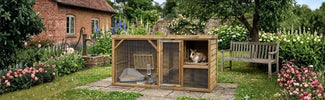
A rabbit cage is the permanent living space of a rabbit, designed as a safe and comfortable environment. A good rabbit cage offers room to move, a shelter to rest and sufficient opportunities for enrichment and feeding. Rabbit cages are available in various designs: from compact indoor enclosures to large outdoor hutches with an adjacent run. The size and setup of the cage largely determine how comfortable a rabbit feels in its environment. What you put in a rabbit cage is therefore at least as important as the hutch itself.
Not every type of bedding, toy or furnishing is suitable for every type of cage. The setup that works best partly depends on the enclosure itself.
| Cage type | What works well inside | What is less suitable | Key consideration |
|---|---|---|---|
| Wooden outdoor hutch with run | Thick layer of hay, wooden chew toys, tunnels, hay rack | Paper bedding in the run (gets wet quickly in rain) | Use a concrete board or rubber mat on the floor of the sleeping area |
| Metal indoor cage | Paper bedding, lightweight toys, water bottle attached to the bars | Heavy wooden elements, large tunnels | Add a soft mat to cushion the hard floor |
| Large rabbit enclosure | Multiple hay stations, grass mats, hiding spots, walkways | Too many loose objects that restrict movement space | Keep at least 2/3 of the floor free for movement |
| Small indoor cage | Compact water bowl, small hay rack, one hiding spot | Large tunnels or an excess of toys | Always combine with daily free roaming time outside the cage |
Good floor covering is essential for the comfort and health of your rabbit. Here are the most commonly used options at a glance.
Alongside the setup, nutrition plays a major role in the wellbeing of your rabbit. Always ensure a varied and balanced diet.
Rabbits are social and curious animals that need mental stimulation. Enrichment in the rabbit cage prevents boredom and promotes natural behaviour.
A good setup starts with a good enclosure. Here are three robust outdoor models that offer sufficient space for everything a rabbit needs.
The rabbit hutch Jop is a handmade wooden outdoor enclosure with a spacious sleeping area and a covered run of 240 x 90 cm. Made from pressure-treated wood and delivered as a prefab assembly kit, built to last 10 to 15 years.
The rabbit hutch Lyla combines a playful appearance with a fully covered run thanks to its pitched roof with roofing felt. Spacious enough for a rabbit toilet, toys and sufficient room to move for two rabbits.
The rabbit hutch Sanna offers more than 3 square metres of play and jumping space — ideal for owners who want to give their rabbits the best setup with enrichment, toys and multiple hay stations. The fully covered enclosure can remain outdoors all year round.
When less setup is better: In a small cage, less is more. Too many toys or too much bedding restricts movement space. Always keep at least two thirds of the floor free for movement.
When extensive enrichment is overkill: For a rabbit that roams freely outside the cage for several hours a day, a hay rack, water bowl and one hiding spot are sufficient. Extensive enrichment is most useful when the cage is the primary living space.
Common mistakes when setting up a rabbit cage:
User scenarios:
At Doika we offer tailored advice: we help you not only with choosing the right enclosure, but also with the ideal setup for your rabbits.
Hay is the most recommended bedding — it provides comfort and supports digestion. Untreated wood shavings or paper bedding are good additions for absorbing moisture and odour.
Chew toys made from untreated wood, tunnels and grass mats are excellent choices. Rotate toys regularly to keep your rabbit active and curious.
The sleeping area should be dark, quiet and dry with a soft layer of hay or nesting material on the floor. Set up a separate corner as a toilet zone and avoid strong smells or bright light.
Replace the bedding in the toilet corner at least twice a week. A thorough cleaning of the entire cage is recommended weekly.
The absolute essentials are: unlimited fresh hay, clean drinking water, a hiding spot and sufficient room to move. Fresh vegetables, chew toys and a dedicated toilet corner complete the setup.
Doika is a specialist provider of animal enclosures with an extensive range of rabbit cages for outdoors. All enclosures are handmade from high-quality materials and delivered as a prefab assembly kit, typically within 6 working days. Doika offers product guarantees, professional customer service and is happy to help you find the right enclosure and ideal setup for your rabbits.
A well-equipped rabbit cage is the foundation for a happy and healthy rabbit. With the right bedding, varied nutrition and sufficient enrichment you give your pet everything it needs. Looking for a quality outdoor enclosure that fits perfectly? Browse the full range in the rabbit cage collection at Doika.


